
Winter storms in NYC and Westchester place extreme stress on every chimney system, especially older masonry chimneys. Snow, ice, and wind-driven rain force moisture into mortar joints, flue liners, and chimney crowns. When temperatures drop, freeze-thaw cycles expand trapped water and cause cracking and chimney spalling. This damage weakens the structure and creates pathways for water entry and carbon monoxide leaks. For homeowners relying on heating systems during winter, this means higher safety risks and potential chimney fires if problems are not addressed quickly.
Chimney spalling is one of the most visible signs of storm damage and should never be ignored. It appears as flaking, chipping, or cracked bricks on the exterior of a masonry chimney. This happens when water penetrates the brick and freezes, causing the surface to break apart over time. As spalling worsens, it exposes the inner structure to further moisture and structural weakening. Homeowners in NYC and Westchester may notice loose bricks or debris around the chimney base, which means it’s time to schedule professional chimney maintenance to avoid bigger damage.
The chimney crown acts as the first layer of protection against water penetration during winter storms. When crown cracks form, they allow water to seep into the chimney system and damage the flue liner and mortar joints. In freezing conditions, this moisture expands and worsens the cracks, accelerating deterioration. Over time, this leads to internal damage that affects draft performance and increases the risk of chimney fires.
Snow buildup on a chimney cap or rain cap can block airflow and create dangerous venting problems. When airflow is restricted, combustion gases may not exit properly, increasing the risk of carbon monoxide entering the home. Heavy snow can also trap moisture, leading to rust on metal chimney liners and damage to the chimney crown. In NYC and Westchester, where heavy snow is common, removing buildup helps keep airflow clear and your chimney working properly, as noted in winter weather safety tips However, homeowners should avoid climbing onto icy roofs and instead rely on professional chimney services when needed.
Waterproofing a masonry chimney is safe when done correctly and is highly recommended in areas like Westchester and NYC. Brick and mortar naturally absorb moisture, which makes them vulnerable to freeze-thaw cycles and water damage. Applying a breathable masonry sealer helps repel water while allowing trapped moisture to escape. This prevents chimney spalling, crown cracks, and long-term structural issues. Research from the Brick Industry Association shows that proper sealing helps protect chimneys from water damage while still letting moisture escape safely.
Proper sealing methods recommended by the Brick Industry Association help protect masonry chimneys from water penetration while still allowing the material to breathe.
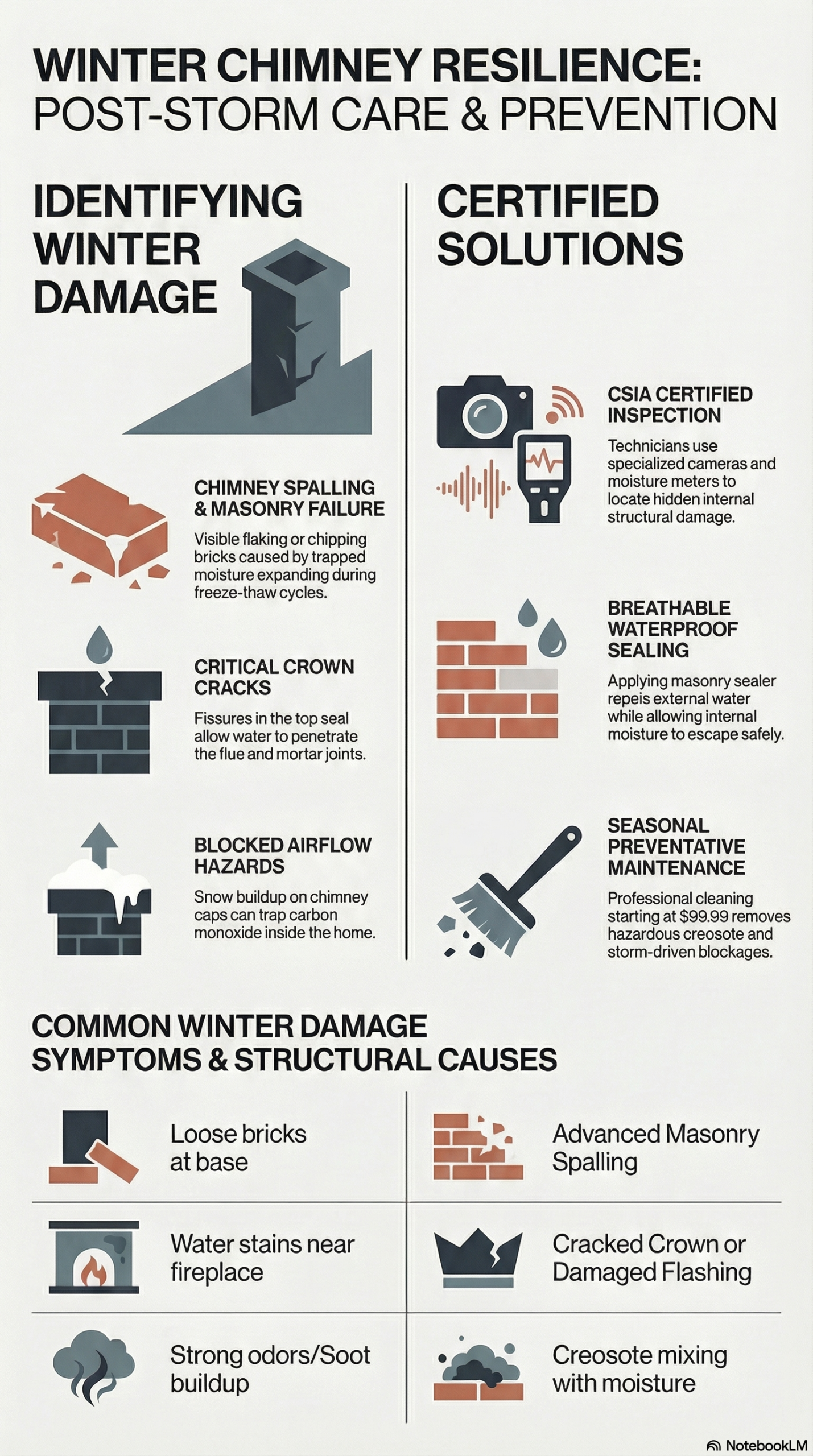
Storm damage impacts multiple parts of a chimney system, not just the exterior. High winds can loosen damaged flashing, allowing water to enter where the chimney meets the roof. Heavy rain and snow contribute to water penetration that affects the smoke chamber, flue tile, and chimney liner. Over time, this leads to creosote buildup mixing with moisture, which creates acidic conditions that damage the liner. The National Institute of Standards and Technology says that moisture getting into masonry is a main cause of damage, especially in harsh weather.
Research from the National Institute of Standards and Technology shows that moisture intrusion is one of the leading causes of structural damage in exposed masonry systems.
Older chimneys in places like White Plains and nearby Westchester areas are more likely to be damaged after winter storms.Many of these chimneys were built with clay tile liners and traditional mortar that degrade faster under repeated freeze-thaw cycles. Over time, materials become brittle and more prone to cracking, spalling, and water damage. This increases the likelihood of venting problems and chimney fires. Homeowners with older chimneys should get regular inspections to catch problems early before needing major repairs or a full replacement.
There are several warning signs that indicate a chimney may be failing after winter storms. Water stains near the fireplace, rust on the metal damper, and visible cracks in the chimney crown all suggest moisture intrusion. You may also notice soot buildup or strong odors caused by creosote buildup inside the chimney flue. These problems often lead to reduced efficiency in heating systems and increased safety risks. If ignored, they can result in carbon monoxide leaks or chimney fires, making early detection critical for homeowners in NYC and Westchester.
A professional chimney inspection uses advanced tools to identify hidden damage that cannot be seen from the outside. Certified chimney sweep technicians use cameras, moisture meters, and thermal tools to find cracks, blockages, and airflow problems. These tools help locate issues such as soot buildup, damaged flue liners, and obstructions caused by debris or snow. The Occupational Safety and Health Administration says it’s important to use the right tools and follow safe practices when inspecting structures exposed to harsh weather.
After winter storms, homeowners should follow a clear chimney inspection checklist to ensure safety and performance. Start by checking the chimney cap for blockages and inspecting the chimney crown for visible cracks. Look for signs of chimney spalling, damaged flashing, and water entry around the roofline. Inside the home, monitor for soot buildup, unusual odors, or poor draft performance. Scheduling a professional inspection with experts like Certified Chimney Service helps make sure your chimney is safe and ready before the next heating season.
Get clear answers to common questions about chimney storm damage, inspections, and safety concerns for homes in New York City and Westchester.
Chimney Cleaning – $99.99 per flue