
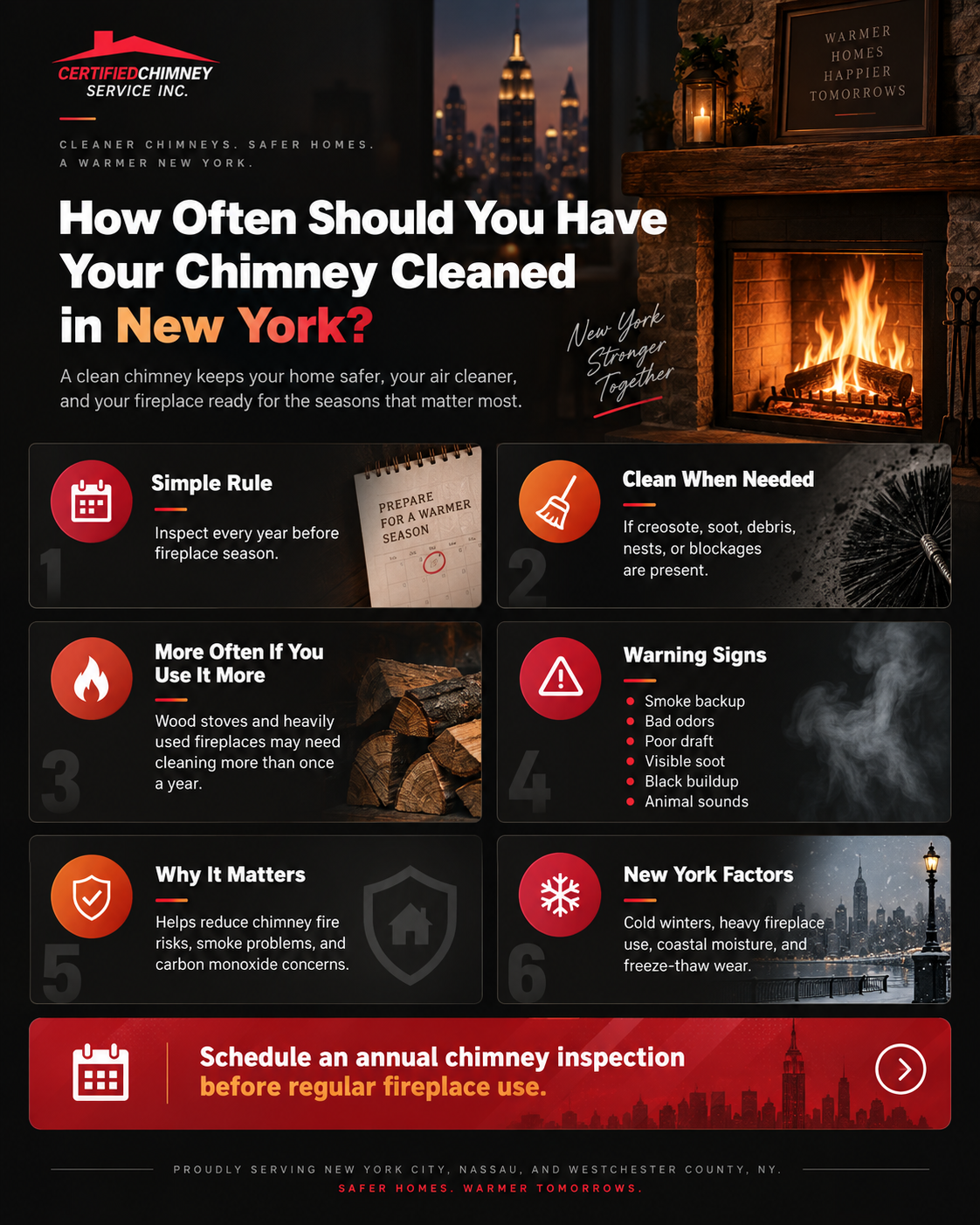
Most New York homeowners should have their chimney inspected at least once a year and cleaned whenever creosote, soot, debris, or blockages are present. If you use your fireplace, wood stove, or heating appliance often, you may need chimney cleaning more frequently. New York homes deal with cold winters, heavy fireplace use, coastal moisture, animals, and freeze-thaw wear that can affect the chimney system. Certified Chimney NY provides chimney sweeping, chimney cleaning, chimney inspection, chimney maintenance, and fireplace safety services across New York.
The best rule is to schedule a chimney inspection every year before regular fireplace use. Cleaning should be done when the chimney sweep finds creosote buildup, soot, animal nests, debris, damaged components, or airflow problems. Some homeowners need annual chimney cleaning. Others may need cleaning less often if they rarely use the fireplace and the chimney stays clean. The inspection decides the schedule. CSIA follows NFPA 211 guidance that chimneys, fireplaces, and vents should be inspected yearly for soundness, deposits, and proper clearances.
Chimney sweeping removes fire byproducts that collect inside the flue, smoke chamber, damper area, and fireplace system. These deposits can restrict airflow, cause smoke backup, create bad odors, and increase fire risks. A clean chimney helps smoke, heat, and combustion gases leave the home more safely. Chimney maintenance also gives the technician a chance to spot cracked flue tiles, water damage, chimney cap issues, damaged flashing, or masonry problems. That matters before the first cold night, when New York homeowners start using fireplaces again.
Creosote is a combustible residue that forms when wood smoke cools and sticks to the chimney walls. It may look flaky, sticky, shiny, or hard depending on the stage of buildup. EPA notes that burning properly seasoned wood can reduce creosote buildup, and wood with moisture content below 20% is best. Wet wood, poor draft, slow-burning fires, and cold flue temperatures can create heavier deposits. Creosote needs to be removed because it can fuel a chimney fire.
During chimney sweeping, a chimney sweep protects the work area, brushes the flue, removes soot and creosote, cleans the smoke chamber when needed, and checks the fireplace system. Professional tools may include brushes, rods, drop cloths, vacuums, and inspection equipment. The technician may also check the chimney cap, damper, firebox, flue liner, masonry, and visible exterior. Certified Chimney NY provides professional chimney sweeping and cleaning services in New York, including Nassau, Suffolk, Westchester County, and New York City.
Yes, chimney sweeping can help reduce bad fireplace odors when the smell comes from soot, ash, creosote, or debris. Summer humidity can make creosote and old ash smell stronger. Animal nests, moisture, mold, or water intrusion can also create odors, and cleaning alone may not solve those problems. If the odor returns after cleaning, the chimney may need a cap, waterproofing, masonry repair, liner repair, or better draft correction. A chimney inspection helps identify the true cause.
Wood stoves, fireplace inserts, and heavily used fireplaces may need chimney cleaning more than once per year. These systems can create more creosote, especially when the fire burns low, the wood is damp, or the flue is cold. If you burn wood several times per week during the heating season, ask your chimney sweep whether mid-season cleaning is needed. Signs include smoke backup, poor draft, visible soot, strong odors, black buildup, or flakes falling into the firebox.
Skipping chimney cleaning can allow creosote, soot, leaves, animal nests, and other blockages to build up inside the flue. This can increase the risk of chimney fires, carbon monoxide problems, smoke backup, and poor heating performance. A dirty chimney can also hide cracked liners, loose mortar, damaged caps, or water intrusion. If the chimney serves a heating appliance, venting problems can affect the safe movement of combustion gases. Regular chimney care reduces the chance of emergency repairs during the heating season.
DIY chimney cleaning is not recommended as a replacement for professional service. A homeowner may remove ashes from the firebox, but a professional chimney sweep has the tools and training to clean the flue, check the smoke chamber, and identify hidden fire hazards. Without inspection equipment, it is easy to miss cracked flue liners, glazed creosote, water damage, loose chimney caps, or blockage above the fireplace. Hiring a CSIA Certified chimney professional gives homeowners a better chance of catching problems before they become dangerous.
Certified Chimney NY helps New York homeowners stay ready for fireplace season with chimney cleaning, chimney sweeping, chimney inspection, creosote removal, fireplace maintenance, chimney cap service, liner review, and repair recommendations. If you have not had your chimney inspected in the last year, or if you notice odors, smoke backup, visible soot, animal sounds, or poor draft, schedule service before using the fireplace again. Request chimney service through Certified Chimney NY to plan professional chimney cleaning for your New York home.
Learn when to have your chimney inspected and cleaned, what warning signs to watch for, and how regular chimney maintenance can help keep your fireplace system working safely.
Most New York homeowners should have their chimney inspected at least once a year. Cleaning should be performed whenever creosote, soot, debris, animal nests, or other blockages are found. Homes that use fireplaces or wood-burning appliances frequently may need chimney cleaning more than once during the heating season.
Not necessarily. Even if you rarely use your fireplace, an annual chimney inspection is recommended because animals, moisture, debris, damaged masonry, or ventilation problems can develop between uses. A chimney professional can determine whether cleaning is necessary based on the condition of the flue and fireplace system.
Common warning signs include strong fireplace odors, visible soot or black buildup, poor draft, smoke entering the home, flakes falling into the firebox, or animal sounds coming from the chimney. These symptoms can indicate creosote buildup, debris, nests, or another obstruction inside the chimney system.
Wood stove chimneys and heavily used fireplaces may need cleaning more frequently than once a year. Frequent wood burning, damp firewood, slow-burning fires, and cold flue temperatures can increase creosote buildup. Homeowners who burn wood several times per week should ask their chimney professional whether a mid-season inspection or cleaning is appropriate.
A good time to schedule chimney inspection and cleaning is before regular fireplace use begins in the fall or early winter. Having the chimney checked before the heating season gives homeowners time to address creosote buildup, blockages, damaged components, or masonry problems before colder New York weather arrives.
Chimney sweeping removes combustible creosote and other deposits that can accumulate inside the flue. Reducing this buildup is an important part of lowering chimney fire risk. A professional inspection can also identify damaged liners, ventilation issues, or other conditions that may affect fireplace safety.
Yes. Chimney cleaning can help when odors come from soot, ash, creosote, or debris inside the fireplace and flue. However, persistent odors may also be caused by moisture, animals, mold, water intrusion, or draft problems. An inspection can help determine the underlying cause.
Homeowners can remove ordinary ash from the firebox, but DIY cleaning is not a substitute for professional chimney sweeping and inspection. Specialized tools and inspection equipment may be needed to properly clean the flue and identify problems such as glazed creosote, cracked liners, damaged chimney caps, moisture damage, or hidden blockages.
Schedule professional chimney cleaning and inspection in New York.
Article details:
Share: