
Thermocrete is a ceramic-based chimney lining system used to seal, protect, and restore certain chimney flues. It is often described as a sprayed ceramic technology because a ceramic flue sealant is applied inside the chimney flue to create a heat-resistant coating. This can help cover small cracks, gaps, and worn masonry surfaces inside residential masonry chimneys. In New York, older homes may have clay tile liners, deteriorating chimney joints, or a cracked flue from age, moisture, or heat stress. A chimney inspection is needed before deciding if Thermocrete is the right repair.
Thermocrete ceramic flue sealant is applied to the inside of the chimney flue after the system is cleaned and prepared. The goal is to create a fire-resistant ceramic layer that bonds to the masonry surface and helps seal small openings. The manufacturer describes Thermocrete as a ceramic liner for chimney repair, restoration, and energy conversion of chimneys and chimney flues through sprayed ceramic technology. This can support a smoother smoke passageway, but it is not a one-size-fits-all fix. Severe fire damage, missing flue tiles, or major structural issues may require another relining method.
Thermocrete and stainless steel chimney liners solve different chimney liner problems. A ceramic chimney liner may help seal cracks in certain masonry flues, while stainless steel flue liners create a new metal venting path inside the chimney. Stainless steel chimney liners may be better when the flue needs resizing for gas and oil heating systems, when the existing liner is badly damaged, or when appliance venting requirements call for a stainless-steel liner. The right choice depends on the chimney flue, heating appliance, carbon monoxide risk, and the full condition of the venting system.
Thermocrete may be considered when a masonry fireplace or chimney has cracked flue tiles, small gaps, smoke leakage, or a deteriorating chimney surface that still has enough structure to restore. It may also be discussed during chimney restoration, relining services, or chimney repair when homeowners want an option other than stainless steel. Thermocrete technical information states that Thermocrete ceramic flue sealant has been tested by Warnock Hersey and listed to standards including UL 1777 and ULC S 635. A trained professional still needs to confirm whether the chimney is a proper candidate.
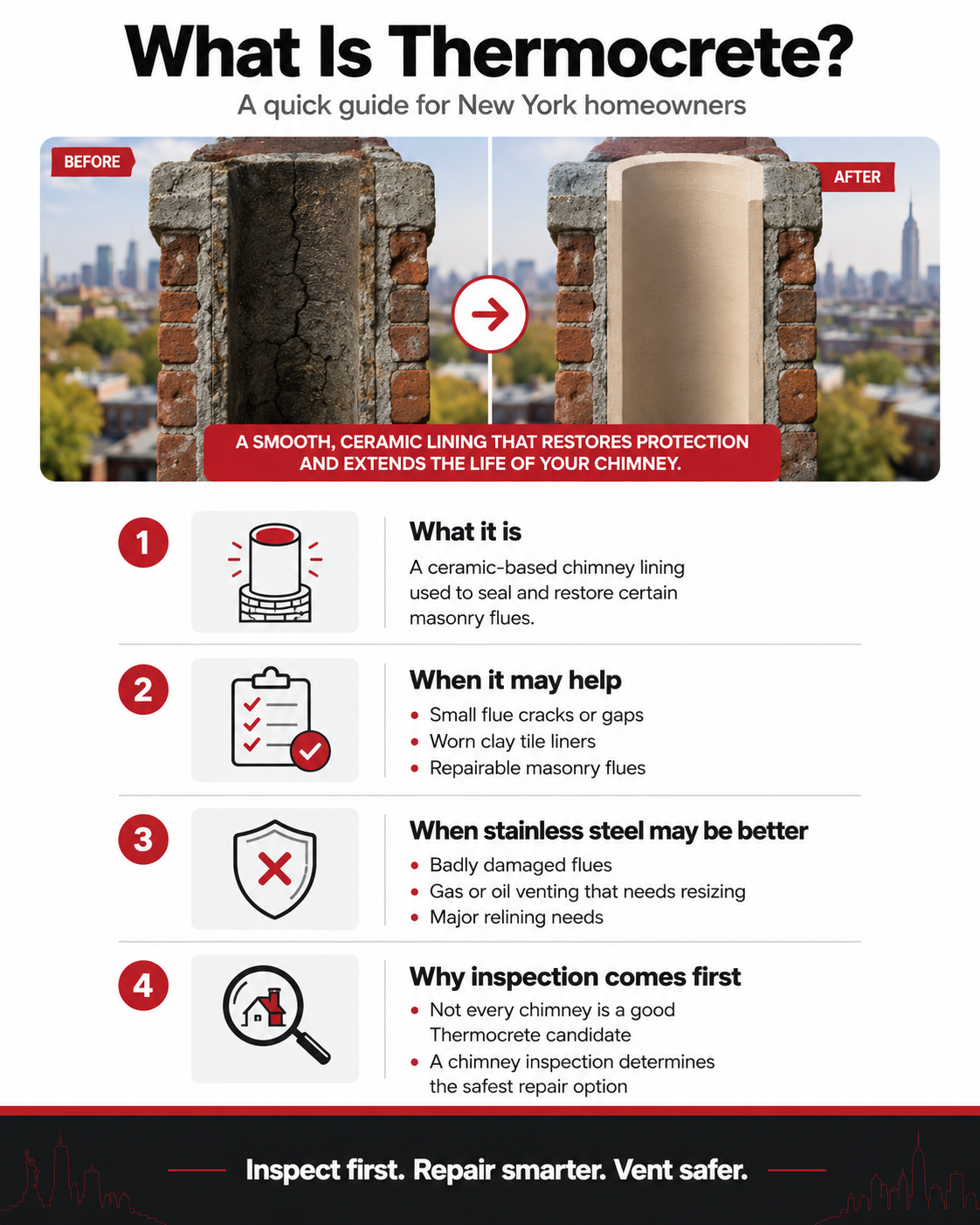
Thermocrete may not be enough if the chimney has major fire damage, heavy creosote buildup behind cracked tile liner sections, missing masonry, unsafe chimney walls, or serious carbon monoxide concerns. It is also not automatically the best answer for every gas and oil appliance because many heating systems need the flue downsized for proper venting. The National Fire Protection Association explains that chimney and vent standards focus on safe removal of flue gases and proper installation. That is why the chimney industry relies on inspection first, then the correct liner or repair method.
You may need Thermocrete if your chimney inspection shows a repairable cracked flue, worn ceramic liner, damaged clay tile liners, or minor gaps that can be restored with a ceramic-based lining. You may not need it if a stainless steel liner, full chimney liner replacement, masonry repair, or chimney rebuilding is the safer choice. The Chimney Safety Institute of America explains that chimney sweeps and venting professionals help homeowners understand chimney cleaning, inspection, and safer fireplace use. For New York homeowners, Certified Chimney NY can inspect the chimney system and recommend the right relining option.
Get clear answers to common questions New York homeowners have about Thermocrete, ceramic chimney lining, cracked flue repair, stainless steel liners, and chimney inspections.
Article details:
Share: