
A chimney crown is the concrete surface located at the top of a masonry fireplace system. It sits around the clay flue tile and protects the chimney structure from rain and moisture. When the crown is properly built, it directs water away from the chimney tops and prevents moisture from entering the masonry. Over time, weather exposure can cause small cracks in the concrete crown pours. Once these cracks form, water molecules begin entering the chimney structure. If the damage is ignored, water infiltration can weaken masonry joints and lead to structural damage inside the chimney system. Maintaining the chimney crown helps protect the entire fireplace and venting system from long term water damage.
Chimneys in New York face harsh weather conditions throughout the year. Cold winters, snow accumulation, and freeze thaw cycles place stress on exposed masonry surfaces. When water enters small cracks in the chimney crown, freezing temperatures cause the moisture to expand. This expansion widens cracks and slowly damages the crown surface. Homes in areas such as Long Island and the Capital District experience these cycles repeatedly each winter season. Over time, damaged masonry around the crown can allow water leaks to reach the flue liner and firebox assemblies. Repairing chimney crowns early helps prevent widespread structural damage and keeps the chimney functioning safely.
A leaking chimney crown often shows warning signs before serious damage develops. Homeowners may notice water stains on the fireplace walls or near the firebox. In some cases, pieces of damaged masonry or mortar may fall into the fireplace opening. Another common sign is rust forming on chimney caps or chase covers due to constant moisture exposure. Water stains on interior walls near the chimney may also indicate water infiltration. If these signs appear, a chimney inspection should be scheduled quickly. Identifying a chimney leak early helps prevent costly repairs and protects the chimney structure from further damage.
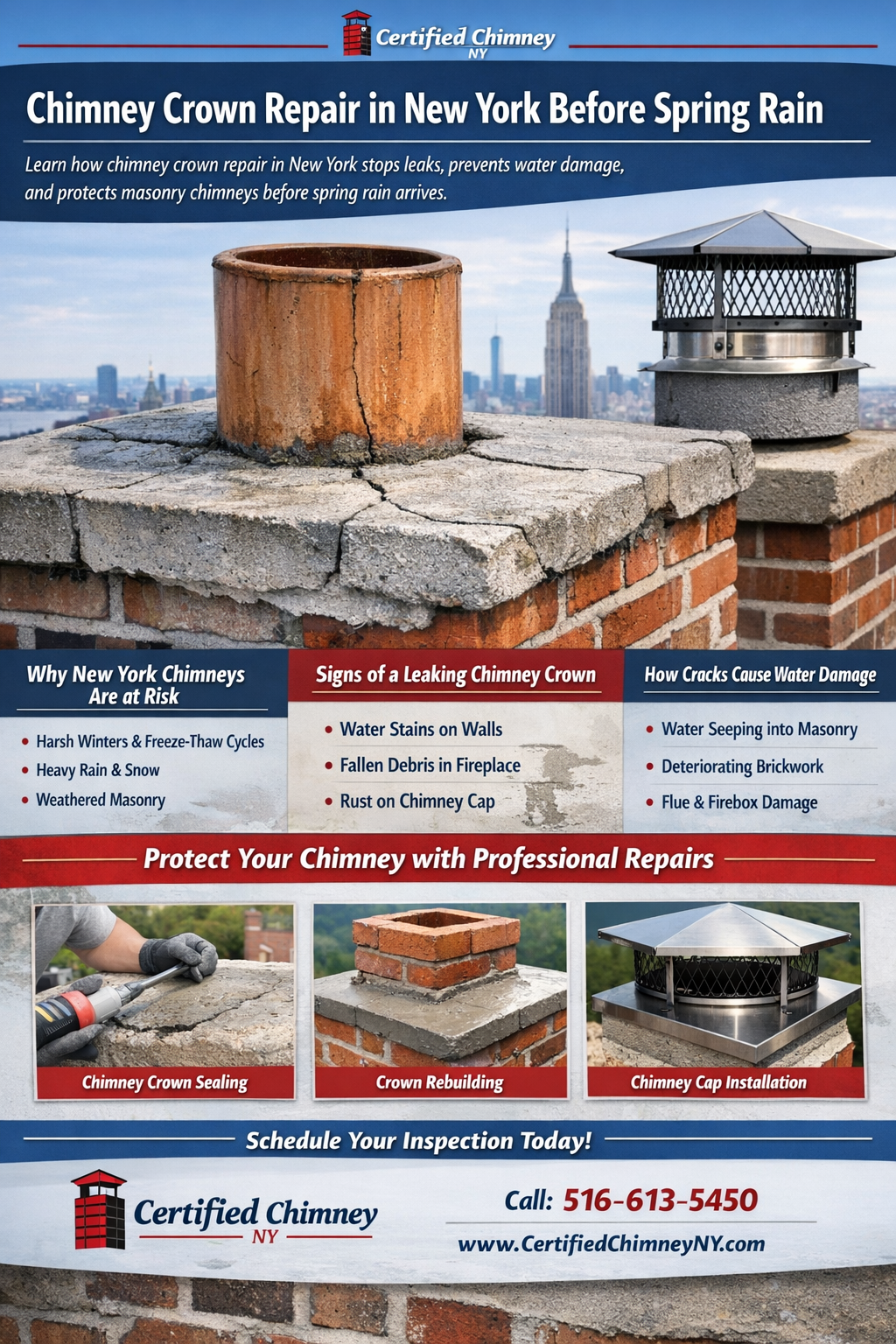
Small cracks in a chimney crown may seem minor at first, but they can create major problems over time. Once a crack forms, rainwater can enter the crown surface and reach the masonry below. As water infiltration continues, the moisture travels into mortar joints and surrounding chimney masonry. This process can weaken the chimney structure and cause visible damage such as crumbling bricks and widening cracks. If left untreated, the water leak may also reach the flue liner and fireplace components. Preventing water infiltration with chimney crown repair helps protect the entire masonry fireplace system from long term deterioration.
A chimney cap is another important component that helps prevent chimney leaks. Installed at the top of the flue liner, the chimney cap prevents rain, debris, and animals from entering the chimney system. Without a chimney cap, water can fall directly into the flue opening and reach the firebox assemblies below. Debris and roof and gutter debris can also accumulate inside the chimney flue, increasing the risk of blockages. According to the Chimney Safety Institute of America, chimney caps are one of the most effective ways to prevent moisture damage and chimney blockages. Installing or repairing chimney caps helps support chimney crown protection and overall chimney maintenance.
The repair process for a chimney crown depends on the condition of the existing structure. Small cracks may be sealed using waterproof sealant or masonry sealant designed for outdoor masonry surfaces. These protective treatments help create a water tight seal that prevents water infiltration. For larger cracks, technicians may apply a chimney crown seal coating to restore the protective surface. In severe cases, the crown may require rebuilding using floating crown techniques or new concrete crown pours. These repair options allow chimney repair technicians to restore the structural integrity of the crown while preventing future moisture damage.
Waterproof sealants play an important role in protecting masonry chimneys from moisture exposure. Specialized masonry sealant products create a protective barrier that repels water while allowing the masonry to breathe. This breathable layer prevents water molecules from penetrating the chimney crown surface. Products such as water repellent coatings are commonly used to strengthen damaged masonry areas. According to the National Park Service preservation guidelines, breathable water repellent treatments help protect masonry from long term water damage while maintaining structural stability. Applying these protective treatments during chimney crown repair helps extend the lifespan of the chimney system.
Routine chimney inspections help identify crown damage before it causes serious problems. During an inspection, certified professionals examine the chimney crown, flue covers, and chimney cap for visible cracks or deterioration. Technicians may also review the inspection report to determine if water infiltration has reached other chimney components. Annual inspections are recommended to maintain chimney safety and prevent fire hazards. The National Fire Protection Association recommends regular chimney inspections to ensure fireplaces and venting systems remain safe for use. Early detection allows homeowners to schedule chimney repair before water leaks spread deeper into the chimney structure.
Water damage from a leaking chimney can sometimes lead to mold growth inside the home. When moisture enters the chimney structure, it may travel into surrounding walls or attic spaces. Damp materials such as wood framing and drywall can create ideal conditions for mold growth. Over time, this moisture exposure may lead to indoor air quality concerns and additional structural repairs. The Environmental Protection Agency explains that moisture control is one of the most important steps in preventing mold growth in homes. Repairing chimney leaks early helps reduce the risk of moisture related issues.
Homeowners should contact certified professionals when signs of chimney crown damage appear. While small surface cracks may seem manageable, improper repairs can allow water infiltration to continue. Professional chimney repair technicians understand the proper materials and repair techniques needed for long lasting repairs. They can also examine related chimney components such as flue liners, chimney caps, and chase covers. If structural damage is present, professional repairs help restore the safety and stability of the chimney system. Calling experienced chimney repair technicians ensures the repair process is completed correctly.
Chimneys should be inspected at least once each year to check for water leaks and masonry damage. Regular inspections help detect problems such as damaged chimney crowns, cracked flue covers, or loose chimney caps. Homes in New York may require inspections more frequently because of seasonal freeze thaw cycles and heavy rain. These conditions can accelerate chimney crown deterioration over time. Scheduling routine chimney inspections helps homeowners stay ahead of potential water damage. Early repairs reduce the risk of major chimney restoration projects and keep the fireplace system operating safely.
Spring rain can quickly expose hidden chimney crown damage. Once heavy rain begins, water can enter small cracks and spread throughout the chimney structure. Addressing crown damage before the rainy season prevents costly water leaks and structural repairs. Professional chimney maintenance ensures that chimney crowns, chimney caps, and flue covers remain properly sealed. Homeowners in New York can schedule inspections and chimney crown repair services through Certified Chimney NY. Taking action early helps protect the chimney system, prevent water damage, and maintain safe fireplace operation for years to come.
Get quick answers to common questions New York homeowners have about chimney inspections, repairs, and seasonal maintenance after winter.