
Many New York homeowners notice water dripping into the firebox when outdoor temperatures suddenly rise. This problem is usually caused by a temperature difference between the cold chimney liner and warmer outside air. As warm air enters the chimney flues, it creates condensation inside the chimney system. This moisture collects and begins dripping down toward the fireplace insert. Over time, this type of water intrusion can cause water stains, rust, and chimney damage. If ignored, this problem can lead to expensive chimney repairs and reduce overall fireplace safety.
Condensation is one of the most common causes of a chimney leak, especially in New York’s changing climate. When warm air mixes with a cold stainless steel liner or masonry chimney, moisture forms along the flue joints. This moisture turns into liquid and begins dripping down into the fireplace. The National Weather Service condensation and temperature guidance explains that rapid warming causes moisture buildup on cold surfaces. This process can create water pooling inside the chimney and cause long term damage to the chimney liner and surrounding masonry.
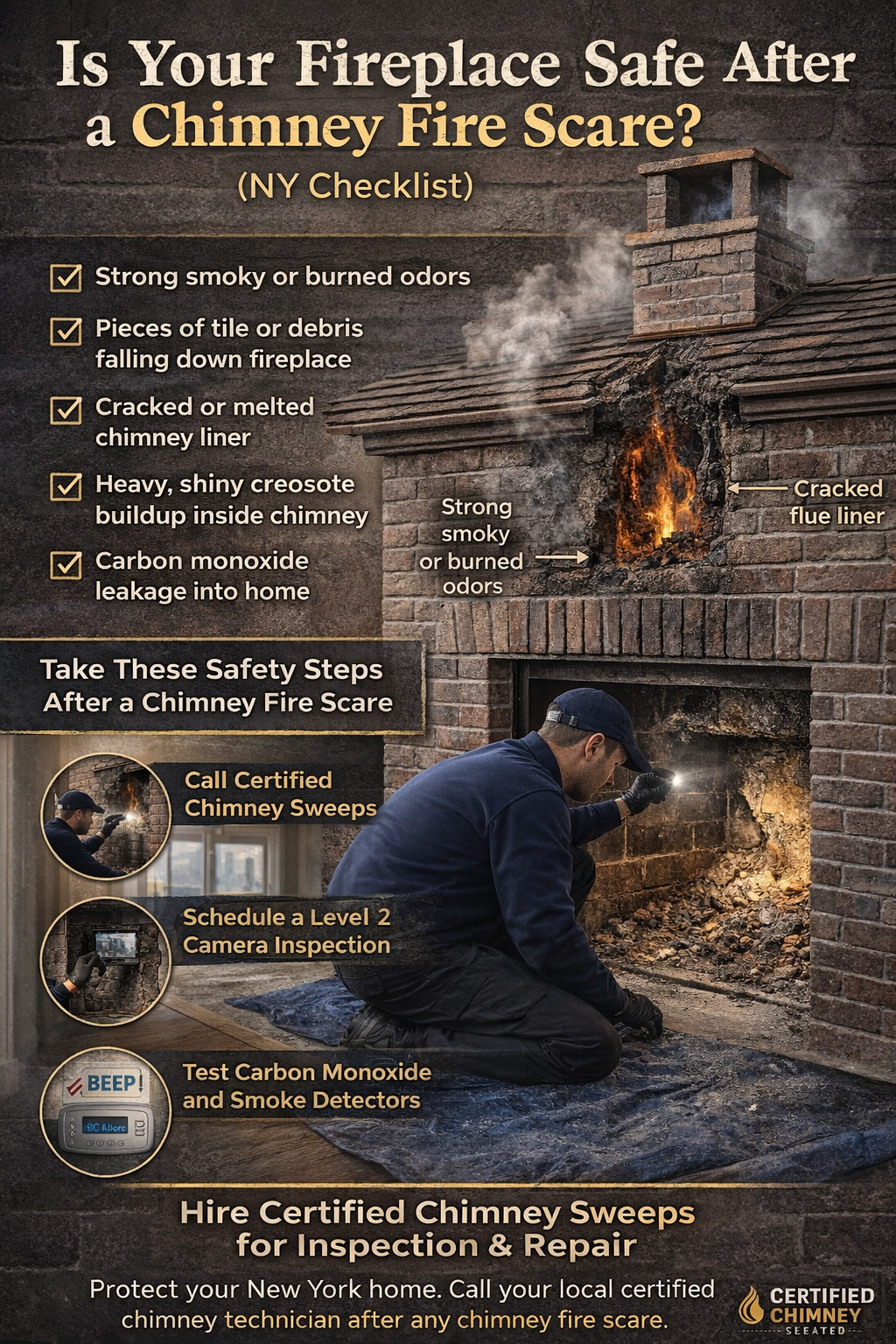
After a chimney fire scare, homeowners should take immediate fire prevention and home safety precautions.
First, stop using your fireplace completely. Even if the fireplace appears normal, hidden structural damage may exist inside the flue liner.
Next, inspect the fireplace and surrounding areas for warning signs such as:
Check your carbon monoxide alarm and CO detector devices immediately. Replace smoke detector batteries and confirm all smoke detectors are functioning properly.
Every New York home should also have portable fire extinguishers installed near the fireplace and heating system.
If your carbon monoxide alarm activates, leave the home immediately and contact emergency personnel.
Many homeowners first notice warning signs inside the fireplace. Common signs include water stains, water marked streaks, or a white, foggy film on chimney surfaces. These stains often appear after snow melts or heavy rain. Moisture may also create mold growth and unpleasant odors. Spalling bricks and deteriorating mortar joints are also signs of moisture damage. These symptoms show that water entry is occurring somewhere in the chimney system. Identifying these warning signs early helps prevent major chimney masonry repair and protects your home from further water damage.
A properly installed chimney cap is one of the most important defenses against water ingress. Chimney caps prevent rain, snow, and debris from entering the chimney flues. Without a chimney cap or rain cap, moisture enters freely and causes water seeping inside the chimney. Roof flashing, including step flashing and storm collar protection, also prevents water entry at the roof level. According to the Chimney Safety Institute of America chimney water protection guide, damaged flashing is a leading cause of chimney leaks. Proper chimney cap installation and flashing repairs protect the chimney exterior and prevent future leaks.
The Chimney Crown protects the top of the chimney from moisture. Over time, cracks form in the mortar crown due to freeze thaw cycles and storm damage. These cracks allow water entry and water pooling inside the chimney. Moisture weakens mortar joints and causes spalling bricks. This type of water damage can spread throughout the masonry chimney. Professional chimney inspection identifies cracks and recommends waterproof sealant or chimney masonry repair. Addressing crown damage early helps prevent costly chimney repairs and protects the chimney structure.
Many homeowners are confused because water appears during warm weather, not rain. This happens because snow and ice inside the chimney melt when temperatures rise. This meltwater travels down the chimney liner and into the firebox. Water vapor also forms when warm air enters the cold chimney. This process is common in New York after winter storms. This type of moisture can damage fireplace components and create rust or mold. Professional chimney inspections identify the source of water and help prevent future leaks.
A chimney leak does more than cause cosmetic damage. Moisture damages the chimney liner and weakens structural components. This increases the risk of carbon monoxide entering the home. The Centers for Disease Control and Prevention carbon monoxide safety guidance explains that damaged venting systems increase carbon monoxide risk. Water intrusion can also damage gas appliance venting systems connected to natural gas or LP gas fireplaces. This creates safety hazards and reduces fireplace efficiency. Addressing leaks protects your home and prevents serious safety risks.
Professional chimney inspections identify the exact source of water entry. Certified Chimney NY uses inspection tools and performs a water leak test to locate moisture problems. Chimney professionals inspect flashing, chimney cap, chimney crown, and chimney liner condition. They perform leak repairs and apply waterproof sealant to prevent water ingress. Professional chimney inspection helps protect your chimney system and extend its lifespan.
Scheduling a professional chimney inspection with Certified Chimney NY helps prevent water damage, chimney leaks, and costly repairs. Regular maintenance keeps your chimney safe and protects your home throughout New York’s changing seasons.
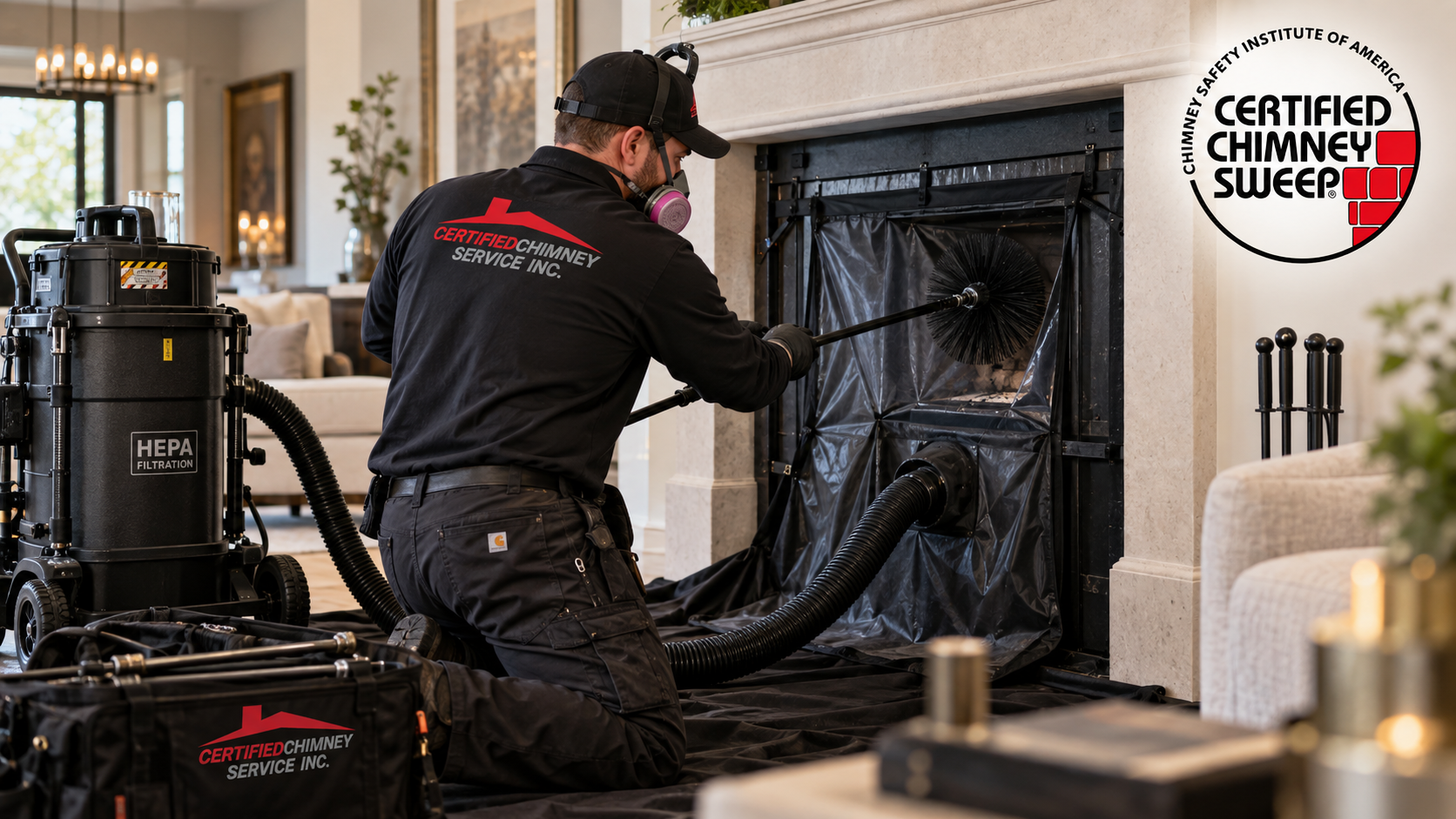
Covers fireplaces, wood stoves, pellet stoves, and heating systems including gas and oil systems. Book now before the winter rush fills our schedule.