
A chimney fire scare is one of the most frightening experiences a New York homeowner can face. You may hear loud popping sounds, see smoke pouring from the chimney, or smell something burning long after the fire appears to stop. Even if the fire seemed minor, your fireplace and chimney system may no longer be safe to use.
During New York’s heating season, fireplaces, gas fireplaces, and heating systems work harder than usual. Creosote buildup, blocked flues, and aging chimney liners increase the risk of chimney fires and carbon monoxide poisoning. After any chimney fire scare, immediate safety checks and professional inspection are critical.
This New York fireplace safety checklist will help you understand what to do next and how to protect your home and family.
Chimney fires burn at extremely high temperatures, often exceeding 2,000°F. These temperatures can crack flue liners, weaken mortar joints, and damage chimney components that safely vent combustion gases.
Even if the fire appears contained, hidden damage inside the chimney system can allow carbon monoxide and other dangerous gases to leak into your home. Carbon monoxide poisoning is one of the most serious risks after chimney fires because the gas is colorless, odorless, and deadly.
According to National Fire Protection Association Code 211, chimney fires can compromise chimney safety and require professional inspection before the fireplace is used again.
Creosote deposit buildup is the leading cause of chimney fires. Creosote forms naturally when wood burning fireplaces and fossil fuel heating systems release combustion gases. Without proper creosote removal and chimney sweeping, these deposits ignite easily.
Chimney-related hazards increase significantly after a fire event, making professional chimney services essential.
After a chimney fire scare, homeowners should take immediate fire prevention and home safety precautions.
First, stop using your fireplace completely. Even if the fireplace appears normal, hidden structural damage may exist inside the flue liner.
Next, inspect the fireplace and surrounding areas for warning signs such as:
Check your carbon monoxide alarm and CO detector devices immediately. Replace smoke detector batteries and confirm all smoke detectors are functioning properly.
Every New York home should also have portable fire extinguishers installed near the fireplace and heating system.
If your carbon monoxide alarm activates, leave the home immediately and contact emergency personnel.
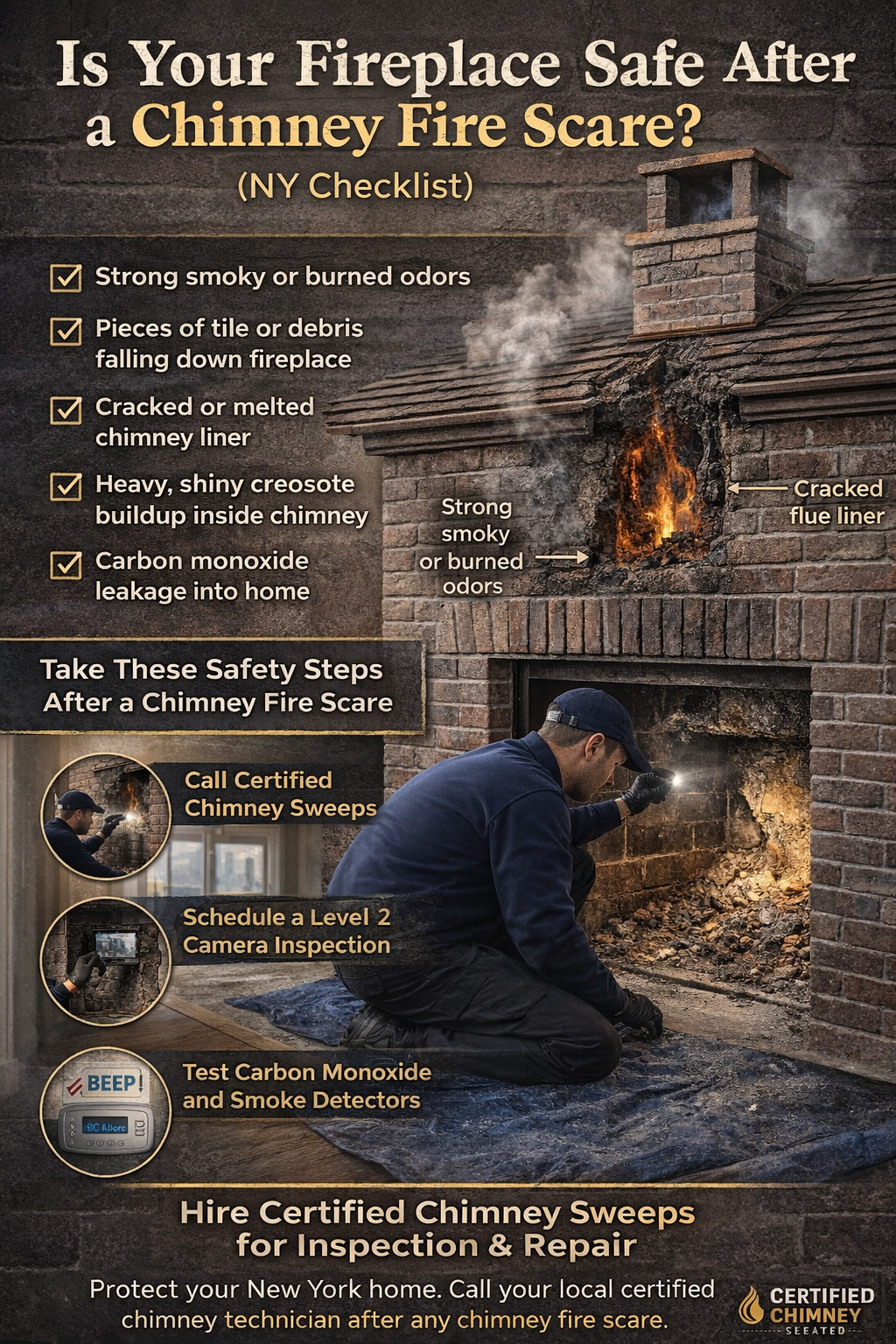
The most important step after a chimney fire scare is scheduling a Level 2 chimney inspection with certified chimney sweeps.
A Level 2 inspection includes video camera assessments of the chimney flue interior. This allows technicians to identify hidden structural damage, cracks, and creosote buildup that cannot be seen during a basic visual inspection.
Certified chimney sweeps perform detailed safety checks and provide a complete inspection report documenting the chimney condition.
Professional chimney sweeping services evaluate:
These inspections follow NFPA Code 211 safety standards and help ensure the chimney system operates safely.
Certified Chimney NY provides Level 2 chimney inspection services throughout New York, including Long Beach, Howard Beach, and surrounding areas.
Carbon monoxide poisoning is one of the most dangerous risks after chimney fires.
Chimneys are designed to safely vent combustion gases produced by wood burning fireplaces, gas fireplaces, space heaters, and heating systems. When chimney liners crack or become blocked, carbon monoxide and carbon dioxide gases can enter your home.
Common sources of carbon monoxide include:
Symptoms of carbon monoxide poisoning include dizziness, headaches, and nausea.
The U.S. Consumer Product Safety Commission strongly recommends installing carbon monoxide alarm devices in every home.
Proper fire safety systems and regular chimney inspections help prevent carbon monoxide exposure.
After a chimney fire scare, chimney relining and fire damage restoration may be necessary.
The intense heat from chimney fires damages clay flue liners and metal chimney components. This damage allows heat and gases to escape into the home structure.
Professional chimney services may include:
Chimney relining restores safe venting conditions and protects your heating system.
Fire damage restoration ensures the chimney system meets safety standards.
Ignoring fire damage increases the risk of future chimney fires.
After a chimney fire scare, additional fireplace components should be inspected.
Check fireplace doors, smoke shelf areas, and damper operation.
Gas fireplace cleaning may be required if soot and debris entered the system.
Inspect pilot lights and ensure proper air/fuel mix.
Check the owner’s manual for your fireplace and heating system for safety recommendations.
If you use wood burning fireplaces, avoid burning charcoal briquettes or improper fuel sources.
Proper fireplace tools and maintenance reduce fire risk.
Heating system safety checks protect your home.
Fire prevention is essential after a chimney fire scare.
Install UL listed carbon monoxide alarm devices and smoke detectors.
Replace smoke detector batteries regularly.
Ensure portable fire extinguishers are accessible.
Develop a fire escape plan for your home.
These home fire safety tips protect your household during heating season.
Certified chimney sweeps often recommend additional chimney sweeping and chimney cleaning to prevent future chimney fires.
Professional chimney services improve chimney safety.
Certified Chimney Service provides professional chimney inspection, chimney sweeping, and fire damage restoration services throughout New York.
Their certified chimney sweeps use video camera assessments to identify hidden damage.
They provide detailed inspection reports and repair recommendations.
Certified Chimney NY serves homeowners across Long Beach, Howard Beach, and surrounding New York communities.
Their chimney services help protect homes and prevent chimney-related hazards.
After a chimney fire scare, follow this checklist:
These steps protect your home.
A chimney fire scare is a serious warning sign that your fireplace may not be safe. Even small chimney fires cause hidden structural damage that increases the risk of future fires and carbon monoxide poisoning.
Professional chimney sweeping, chimney relining, creosote removal, and fire damage restoration ensure your chimney system operates safely.
Certified Chimney Service provides professional chimney inspection and chimney services throughout New York.
Scheduling a professional inspection protects your home, your heating system, and your family.
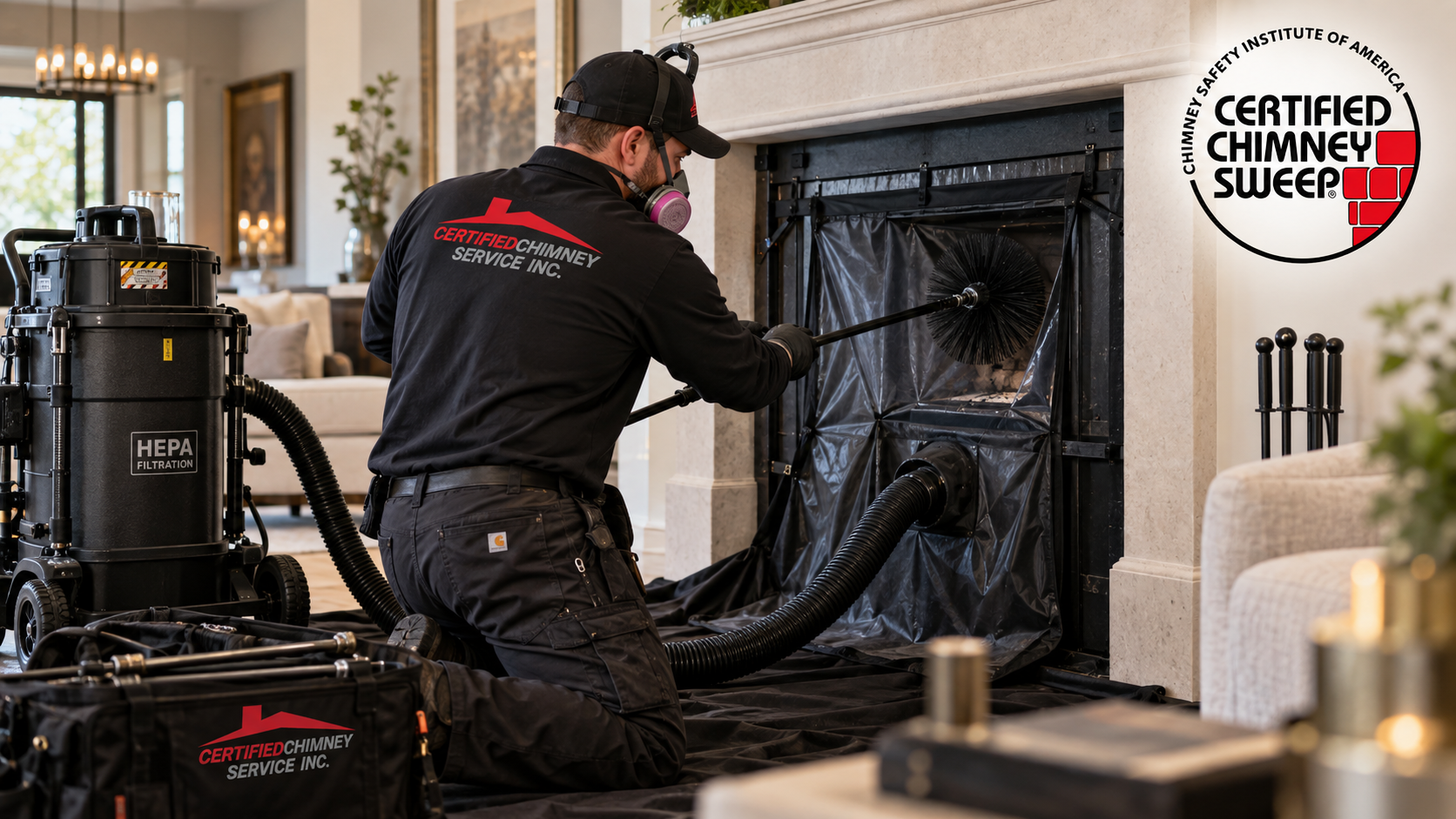
Covers fireplaces, wood stoves, pellet stoves, and heating systems including gas and oil systems. Book now before the winter rush fills our schedule.