Examine the flashing around the base
Loose or rusted chimney flashing is one of the most common causes of chimney leaks after storms.
For chimney safety guidance, homeowners can also reference the Chimney Safety Institute of America.
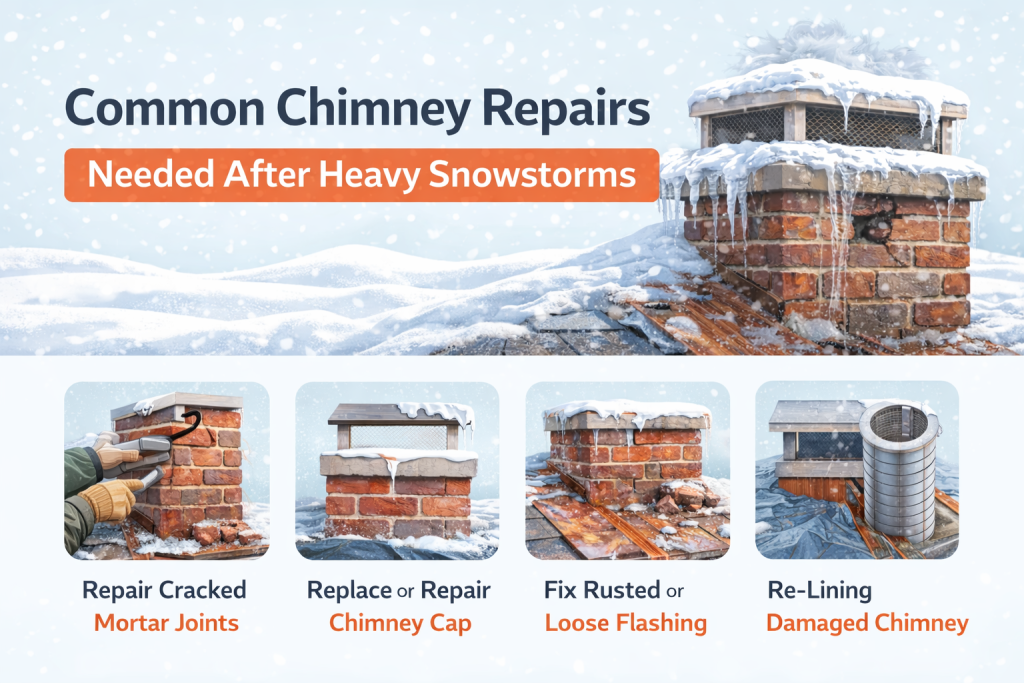
Common Chimney Repairs Needed After Snowstorms
Certified Chimney sees certain repairs requested far more often in winter than any other season.
1. Masonry repairs and cracked mortar joints
When water seeps into masonry materials, it weakens the chimney structure. Tuckpointing or repointing repairs damaged mortar joints to restore structural integrity.
2. Crown repair or replacement
A failing chimney crown can allow snow to sit directly against the masonry, accelerating moisture damage. Winter chimney repairs often include crown waterproofing or full reconstruction.
3. Chimney cap replacement
After snowstorms, metal caps can warp, loosen, or clog with ice. A cap with a spark guard and metal mesh protects the flue from storm debris and improves air circulation.
4. Chimney flashing repair
Snow accumulation along the roofline often creates ice dams that push water beneath flashing. Replacing flashing prevents long-term water leaks inside the home.
5. Chimney liner repair or relining
Moisture infiltrating the liner can weaken clay flue liners, cause shaling, or damage the smoke chamber. Some winter repairs require stainless steel chimney relining or flue replacement.
6. Water damage restoration
This includes repairs for mold and mildew, refractory cement issues, and cracks caused by chimney frost.
7. Creosote buildup and chimney cleaning
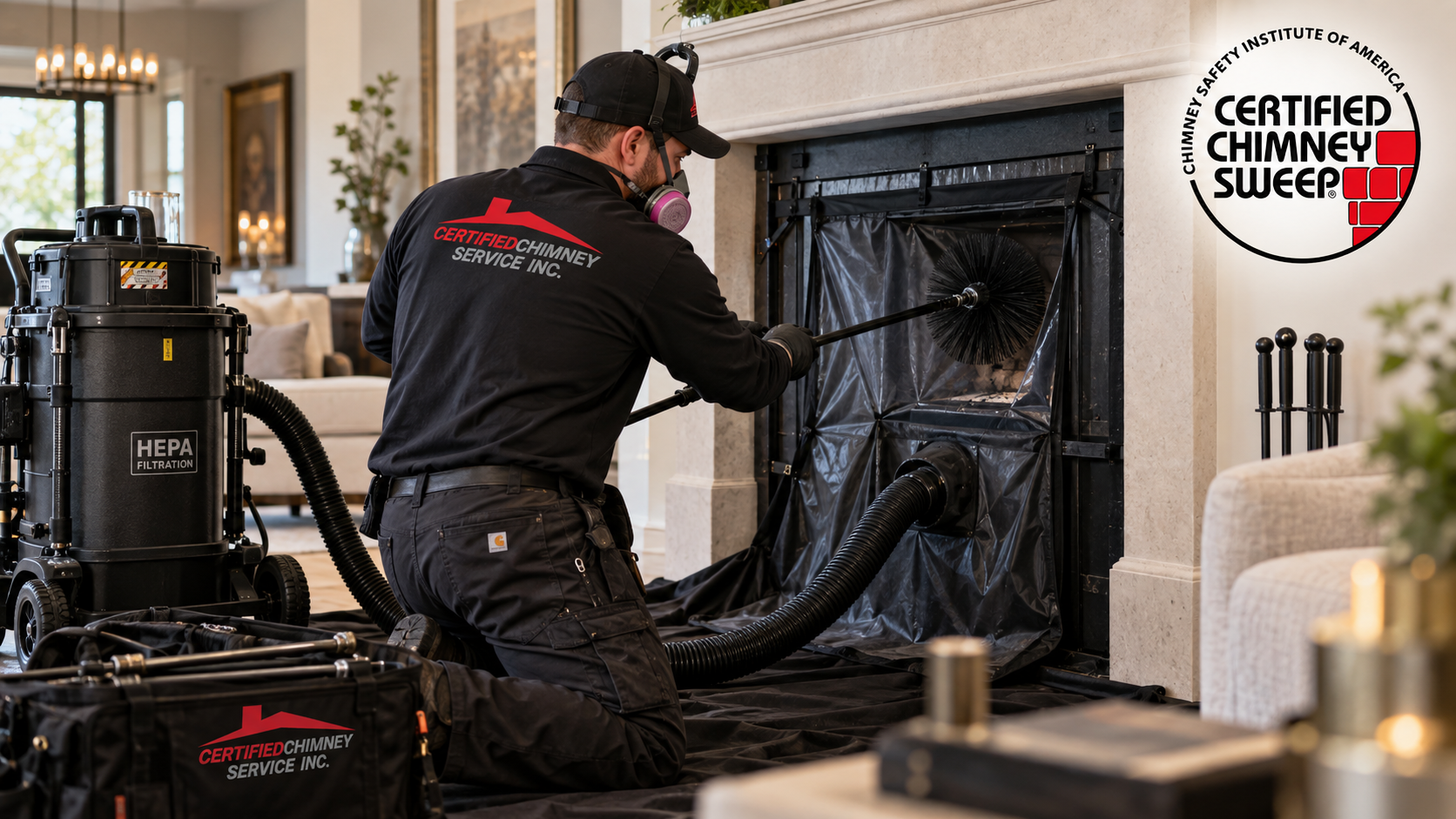
Snowstorms often force homeowners indoors, increasing wood stove or fireplace use. This leads to faster creosote buildup, requiring a professional chimney sweep to prevent fire hazards and carbon monoxide risks.
Why Snowstorms Lead to Chimney Leaks and Structural Damage
Snowstorms bring a combination of moisture, weight, and temperature shifts that most chimneys are not fully prepared for. When snow melts into hairline cracks and freezes overnight, the expansion widens the gaps. Over time, this causes:
- Spalling bricks
- Cracked mortar
- Damaged chimney damper
- Chimney liner deterioration
- Shaling flue tiles
- Smoke chamber erosion
Unchecked, these problems can compromise the fireplace system and increase the risk of home fires or carbon monoxide exposure.
Safety Hazards When Winter Repairs Are Ignored
Ignoring chimney damage after a snowstorm puts your home at risk. Some winter hazards include:
- Water leaks that damage ceilings and walls
- Compromised chimney flue ventilation
- Chimney frost cracks that worsen with each storm
- Toxic fumes entering the living space
- Structural collapse in severe cases
This is why inspection and cleaning after severe weather play such an important role in chimney maintenance.
Preventative Measures to Protect Your Chimney in Snowy Weather
A few steps can dramatically reduce winter chimney repairs:
Waterproofing treatments
A quality waterproofing sealant or waterproofing agents create a barrier that reduces moisture absorption without preventing the masonry from breathing.
Installing or upgrading a chimney cap
A durable cap prevents snow, animals, and debris from entering the flue during storms.
Routine chimney inspection
Having a CSIA Certified Chimney Sweep perform an inspection before and after winter helps identify early signs of damage.
Regular chimney cleaning
Removing soot and creosote buildup reduces fire hazards and ensures the chimney flue stays clear and safe.
Professional vs. DIY Chimney Repairs
Small maintenance tasks like clearing debris or inspecting caps can be done by homeowners, but winter repairs involving masonry, liners, and flashing require a professional chimney repair service. Certified chimney service technicians use specialized tools, safety standards, and waterproofing products tested for winter conditions.
DIY repairs often fail to address deeper structural issues caused by snowstorms, leading to more expensive repairs later.
When You Should Call Certified Chimney for Winter Repairs
You should contact a chimney professional immediately if you notice:
- Persistent water leaks
- Cracked or shaling bricks
- A damaged chimney cap or crown
- Draft problems or smoke entering the home
- Strong odors after storms
- Structural damage following ice buildup
Professional chimney repairs performed early in the season help prevent further deterioration and keep the fireplace system operating safely.
Final Thoughts: Preparing Your Chimney for Harsh Winter Storms
Winter weather can be tough on a chimney, especially in regions with heavy snowfall and freezing temperatures. Small cracks turn into big problems once snow and moisture enter the chimney structure. With regular inspections, chimney maintenance, and timely winter chimney repairs, homeowners can avoid more serious issues and keep their fireplace system functioning safely throughout the season.