Wind Effects on Chimney Components During Nor’easters
|
Chimney Cap | High | Water intrusion, nesting, debris entry |
Spark Arrestor | Moderate–High | Reduced draft, safety risks |
Masonry Crown | Moderate | Cracking, moisture penetration |
Brick Structure | Moderate | Leaning, shifting bricks |
Stainless Liner | Low–Moderate | Ventilation failure |
Freezing Rain, Ice Storms & Ice Dams Around Chimneys
Nor’easters often bring freezing rain—one of the most damaging winter conditions for chimneys.
Freezing rain forms a thick ice layer that expands inside:
- mortar joints
- hairline cracks
- damaged crowns
- gaps around the flashing
This freeze–thaw cycle causes water penetration, leading to loose bricks, crumbling masonry, and spalling.
Ice dams form when melting snow refreezes along the roofline. When they build up around a chimney, they trap water against the structure, causing leaks around:
- the chimney flashing
- roof deck
- attic insulation
- roofing materials
- soffit vents
- ridge vents
Homeowners often misdiagnose these as “roof leaks,” but they’re usually chimney flashing failures made visible after a storm.
Water Intrusion Problems During Coastal Storms
Nor’easters bring the highest moisture load of any winter event.
That moisture finds its way into every vulnerable spot of a chimney, especially when combined with wind-driven rain.
Moisture gets forced into:
- porous brick (especially water-struck brick)
- cracked crowns
- unsealed mortar joints
- gaps in flashing
- deteriorated blue board or ceramic tile around the hearth
- water-soaked insulation in the attic
Once moisture reaches the interior structure, it can damage:
- the chimney hearth
- firebox
- damper opening
- chimney flue
- attic framing
Long-term exposure leads to mold, wood rot, and rusted fireplace components.
How Nor’easters Affect Chimney Draft, Smoke Flow & Safety
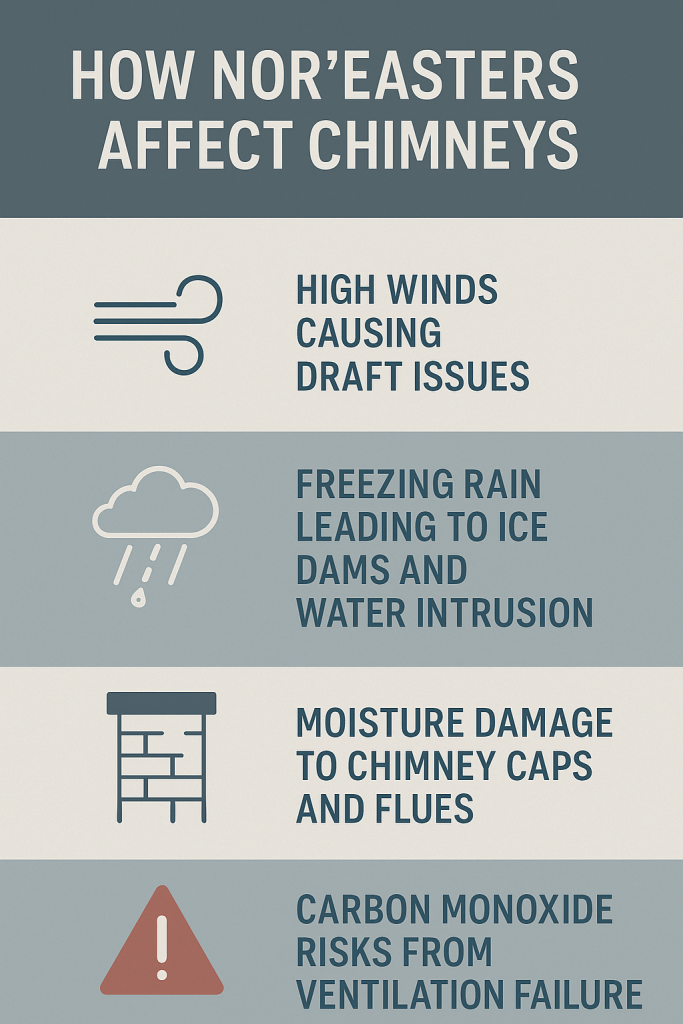
This is where things get serious. Even if your chimney is structurally intact, Nor’easters can disrupt airflow and create dangerous indoor conditions.
Pressure Changes Can Reverse Your Draft
As low-pressure systems move inland, they change the way air flows through your home.
Nor’easters can create:
- Downdrafts (pushing cold air down the flue)
- Poor venting from wood stoves, pellet stoves, and fireplaces
- Backdrafting that sends smoke and fumes indoors
This is why homeowners often report:
- smoky smell
- difficulty lighting fires
- smoke spilling into the room
Carbon Monoxide Risks Increase During Nor’easters
Blocked airflow + trapped fumes = the perfect recipe for carbon monoxide poisoning.
During storms, homeowners seal doors and windows, reducing ventilation.
Combine that with:
- clogged flues
- damaged caps
- ventilation failure
- stuck dampers
…and CO can quietly accumulate indoors.
The Centers for Disease Control and Prevention (CDC) reports spikes in carbon monoxide incidents during:
- winter storms
- power outages
- Nor’easters
- Snow Squalls
- Ground Blizzards
Every home should have:
- carbon monoxide alarms
- carbon dioxide detectors
- functioning dampers
- a clear chimney flue
- Emergency heat source (safe alternative)
Cold Air Plugs & Moisture Affect Appliance Performance
Homeowners with:
- wood stoves
- pellet stoves
- inserts
- Castleton woodstove units
…often notice poor performance after storms.
Nor’easters create:
- cold-air plugs in uninsulated flues
- wet creosote that thickens faster
- reduced draft caused by wind chill
- difficulty starting fires
- smoky leakage through seams
It’s not the stove—it’s the weather system affecting your ventilation.
How Nor’easters Impact Chimney Performance
|
Wind Chill | Draft disruption | Smoke backflow |
Freezing Rain | Cracked masonry | Water leaks |
Low Pressure | Downdrafts | Carbon monoxide poisoning |
Heavy Moisture | Wet creosote | Clogged flue |
Ice Dams | Flashing leaks | Interior damage |